Huayna Picchu a challenge for visitors
We all recognize the impressive silhouette of the great Huayna Picchu Mountain, which has turned Machu Picchu into a global icon through the magnificent classic photographs where it appears in the background, adding even more beauty to the landscape. Despite this, very few people have climbed its rocky cliffs and enjoyed one of the best views of the Inca City of Machu Picchu. Discover what this adventure is like and schedule it during your visit to Cusco.
- The challenging Huayna Picchu Mountain
- Natural Landscape of Huayna Picchu
- What will you find when climbing Huayna Picchu?
- Limit for climbing Huayna Picchu
- Visiting hours
- Can you explore Machu Picchu and climb Huayna Picchu on the same day?
- What is the difficulty of Huayna Picchu?
- What is the best time to climb Huayna Picchu?
- Entrance to the mountain
- Are there age restrictions for Huayna Picchu?
- Where can I leave my luggage?
- Recommendations
- Frequently asked questions
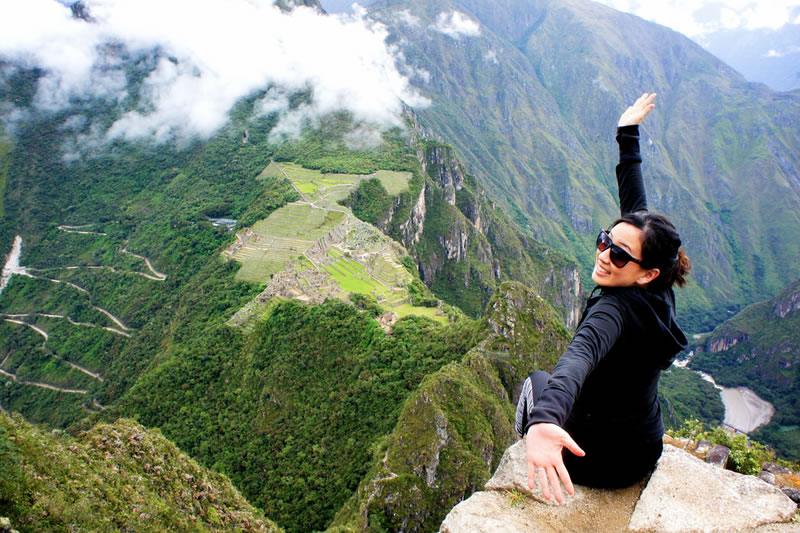
Huayna Picchu Mountain
The challenging Huayna Picchu Mountain
- Huayna Picchu Mountain is located to the north of the Inca citadel of Machu Picchu, at an average altitude of 2,693 meters above sea level. It is also part of the orographic formation known as the Vilcabamba Batholith, which is an extension of the Central Andes mountain range.
- Huayna Picchu, a Quechua word, means Young Mountain and is one of the three sacred mountains within the archaeological sanctuary: Machu Picchu Mountain or Old Mountain, Huayna Picchu or Young Mountain, and Putucusi Mountain or Joyful Mountain.
- From the summit of this mountain, you can enjoy a spectacular view of the Inca City of Machu Picchu, along with the surrounding mountains, forests, rivers, and diverse flora. For these reasons, Huayna Picchu is believed to have served a control and surveillance function.
- The ascent to this mountain follows a narrow path with sections that include stairways carved directly into the rock of the slopes. During the climb, you will be surrounded by dense vegetation typical of the cloud forest.
- Along the mountain trails, you will find two detours: one leading to the small summit of Huchuy Picchu (route 3D) and another to the Temple of the Moon or Great Cavern (route 3C). Each requires its own ticket.
- It is worth noting that Huayna Picchu Mountain is surrounded by terraces that served for containment and agricultural purposes, as well as small constructions along the route.
Location
The Huayna Picchu Mountain is located northeast of the Cusco region, in the province of Urubamba, district of Machu Picchu. Huayna Picchu belongs to the Historic Sanctuary of Machu Picchu and is situated north of the Inca City. It appears in the background of the classic postcard photos of the Inca citadel.
Access
The ascent to Huayna Picchu begins at the control point located on the northern side of the Inca citadel, in front of the Sacred Rock. From there, narrow trails lead along stone stairways built into the mountain slopes.
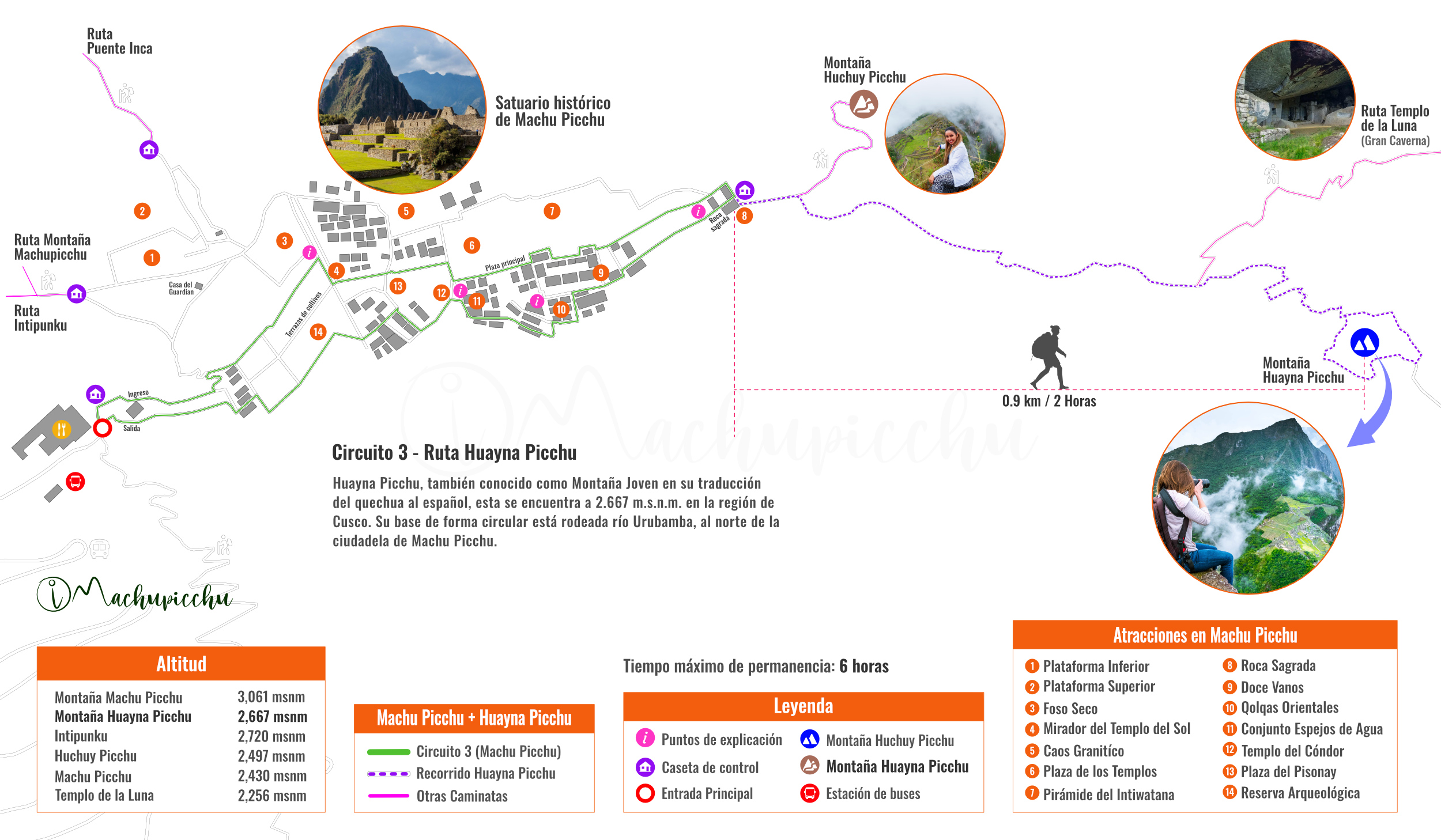
Map of the Huayna Picchu route
High and regular season at Machu Picchu
Visiting Machu Picchu is divided into two different seasons, which differ in the number of available routes and tickets. The high season runs from June 19 to November 2, with a daily visitor capacity of 5,600 and all 10 routes available. The regular season covers the rest of the year, from November 3 to June 18, with a daily capacity of 4,500 tickets and only 6 routes open. The route to Huayna Picchu Mountain (3A) is available throughout the year.
Natural landscape of Huayna Picchu:
- Huayna Picchu Mountain is located in a cloud forest environment, surrounded by lush vegetation that serves as habitat for birds, butterflies, insects, and other small animals.
- Along its trails, you can observe deep cliffs that enhance the incredible panoramic views of the surrounding nature: mountains, rivers, forests, and snow-capped peaks.
- The climate is warm and mild during the dry season (April to October), while in the rainy season (November to March) there is a high probability of rainfall. Even so, Machu Picchu maintains its brightness and greenery all year round.
- Another highlight, besides the view of the Inca City and its surroundings, is the privileged view of the Vilcanota River and the canyon below, whose rushing waters can be heard even from the summit.
- To complete the experience, you can also see the snow-capped Salkantay Mountain (a sacred Apu of the Incas), as well as Inti Punku, the gateway to Machu Picchu from the Inca Trail journey.
What will you find when climbing Huayna Picchu?
- During the steep ascent, visitors can begin to enjoy the landscape and the panoramic views offered by the mountain.
- Along part of the trail, you will find two detours, one leading to the mystical Temple of the Moon and another to the small summit known as Huchuy Picchu.
- It is worth noting that the Incas worshipped the Moon, or Killa, and the temple located on Huayna Picchu reflects their beliefs. Religious ceremonies were likely held at this sanctuary, possibly involving sacred mummies.
- On the other hand, along the paths of Huayna Picchu, you can see terraces and structures that may have been part of an Inca control site and astronomical observatory. This possible function is attributed due to its strategic location on the mountain.
- It should also be noted that once the ascent begins, you can spot numerous cliffs covered with abundant vegetation.
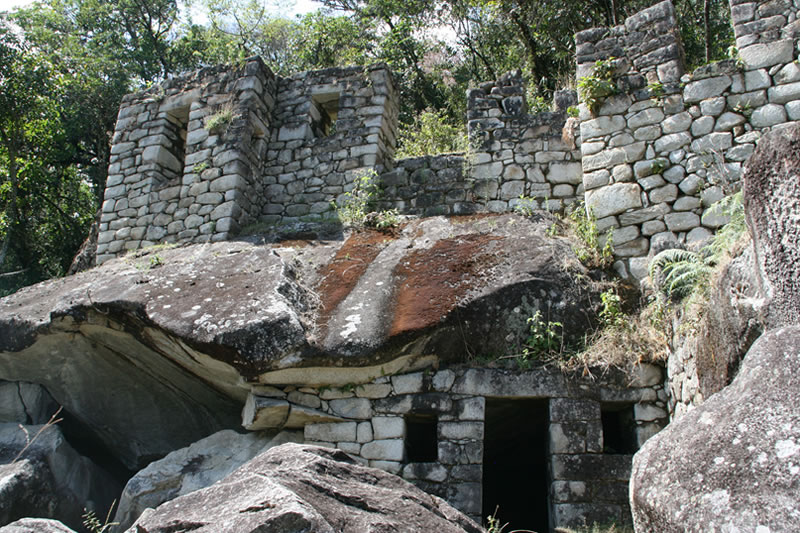
Temple of the Moon – Huayna Picchu
Limit for climbing Huayna Picchu
- Entrance tickets for Huayna Picchu are limited, with only 400 spots available in total, so booking in advance is recommended.
- 350 tickets can be reserved online, while the remaining 50 must be purchased in person in Aguas Calientes (Machu Picchu town).
- Group 1: 200 spots available per day.
- Group 2: 200 spots available per day.
Visiting hours:
| Time slots for Huayna Picchu entry (route 3A) | |||
|---|---|---|---|
| Groups | Entry to the Inca citadel | Entry to the mountain route | Length of stay |
| Group 1 | 07:00 in the morning | 08:00 to 09:00 in the morning | Up to 5 hours |
| Group 2 | 10:00 in the morning | 11:00 to 12:00 at noon | Up to 5 hours |
*The maximum grace period is 30 minutes with any Machu Picchu ticket
For both time slots, it is recommended to spend the night in Aguas Calientes (Machu Picchu Town). In this tourist town, you will find high-quality services such as hotels and restaurants that make your stay more enjoyable. This advice is especially relevant for the first time slot, while for the second, it is possible to travel from Cusco, but it requires waking up very early and taking one of the first trains to Machu Picchu town.
Can you explore Machu Picchu and climb Huayna Picchu on the same day?
- Yes, because the ticket for the Huayna Picchu mountain route (3A) also includes access to circuit 3 (Machu Picchu Royalty) of the Inca citadel.
- Upon entering Machu Picchu, you will have just over an hour to explore the lower part of the citadel, where many important temples and structures are located.
- After descending from the mountain, you will also have time to complete the circuit 3 route. The Huayna Picchu ticket offers a complete experience, full of historical attractions and spectacular panoramic views.
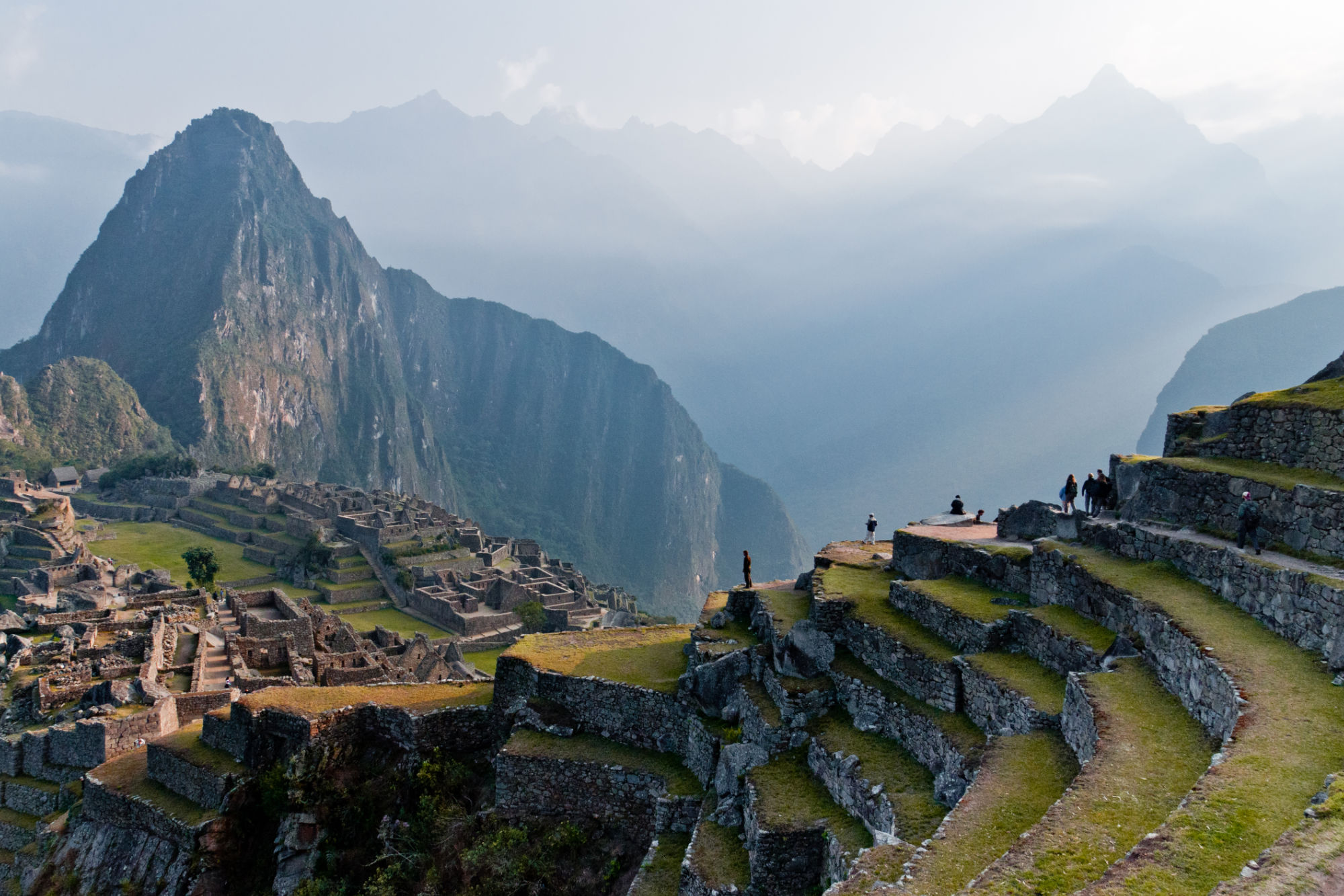
View of Huayna Picchu Mountain from the Inca Citadel
What is the difficulty level of Huayna Picchu?
- The hike to the summit of the mountain is considered moderately difficult. The elevation gain is 300 meters.
- The trail stands out for its very steep, narrow, and uneven stairs. There are also narrow sections where you must hold onto cables to pass through, but despite this, it is not overly complicated.
- Although it is not truly dangerous, you must always follow the marked route. Trying to find your own path or leaving the designated trails could result in a serious accident.
- It is not recommended if you suffer from vertigo due to the steep steps. However, you can always turn back if you decide not to complete the route.
- Depending on your physical condition, the hike takes approximately 2 hours (round trip). The total distance is about 2 kilometers.
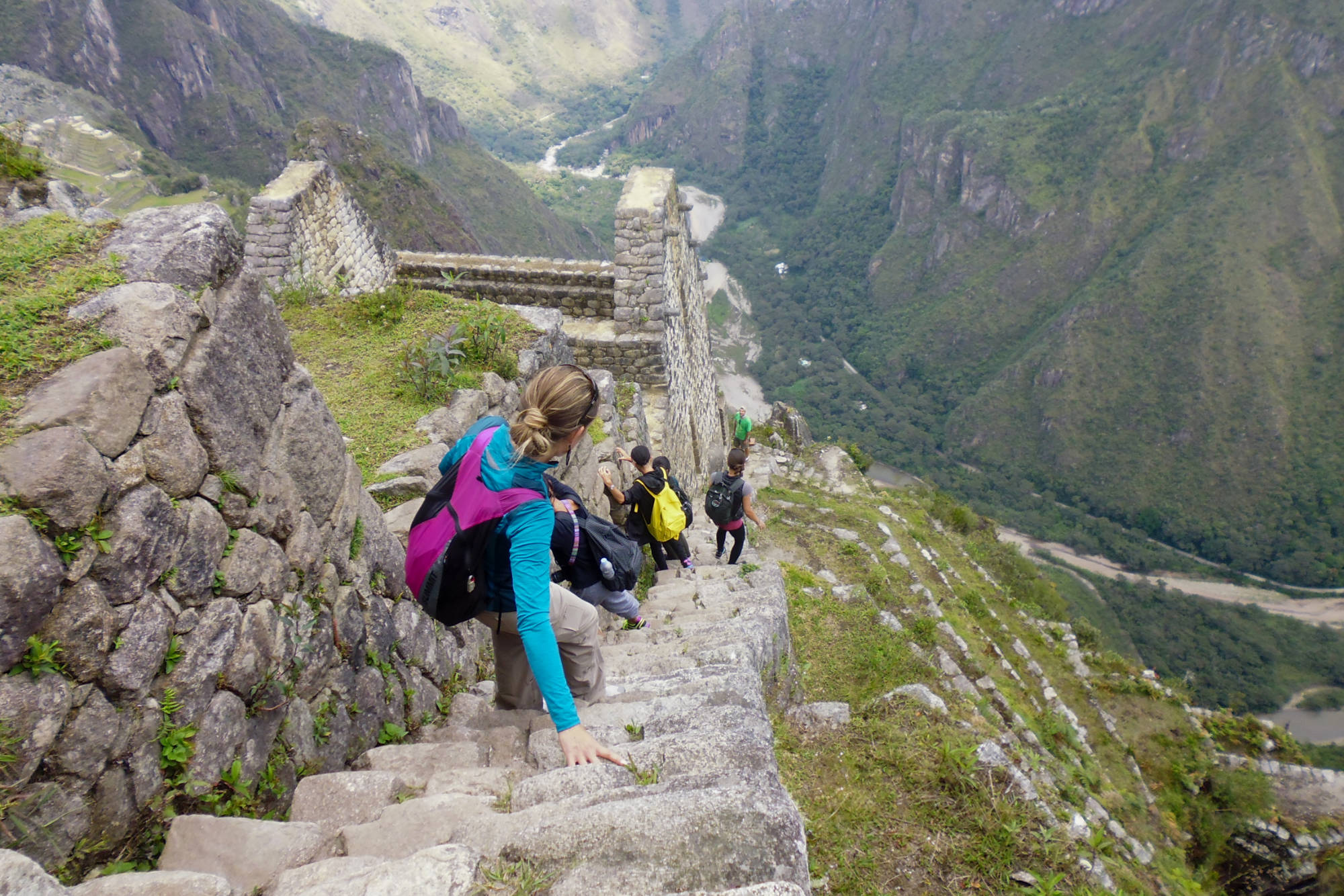
Tourists descending the Huayna Picchu death stairs
What is the best time to climb Huayna Picchu?
- The best time depends on your preferences, although it is mainly related to the weather season.
- The rainiest months are January, February, and March, but they also offer much greener landscapes.
- April, November, and December usually have light rains and often clear skies.
- In May and October, the weather is warm with mild temperatures.
- June, July, August, and September correspond to the dry season, with clear skies—ideal for hiking adventures. However, these months are also the coldest during mornings and nights.
Entrance to the mountain
- To experience the hiking adventure to the summit of Huayna Picchu, you must purchase the Huayna Picchu mountain route ticket (3A).
- As one of the most in-demand tickets, it must be purchased at least two months in advance. During high season (April to August), it should be bought up to three months ahead.
- Tickets offer different prices for university students, minors, and CAN residents (Peru, Bolivia, Ecuador, and Colombia). Children under three years old enter for free.
| HUAYNA PICCHU MOUNTAIN TICKET (ROUTE 3A) | |||
|---|---|---|---|
| Foreign | Price | Domestic – CAN | CAN Price |
| Adult | S/ 200 | Adult | S/ 112 |
| Student | S/ 125 | Student | S/ 80 |
| Child (12 to 17 years old) | S/ 118 | Child (12 to 17 years old) | S/ 80 |
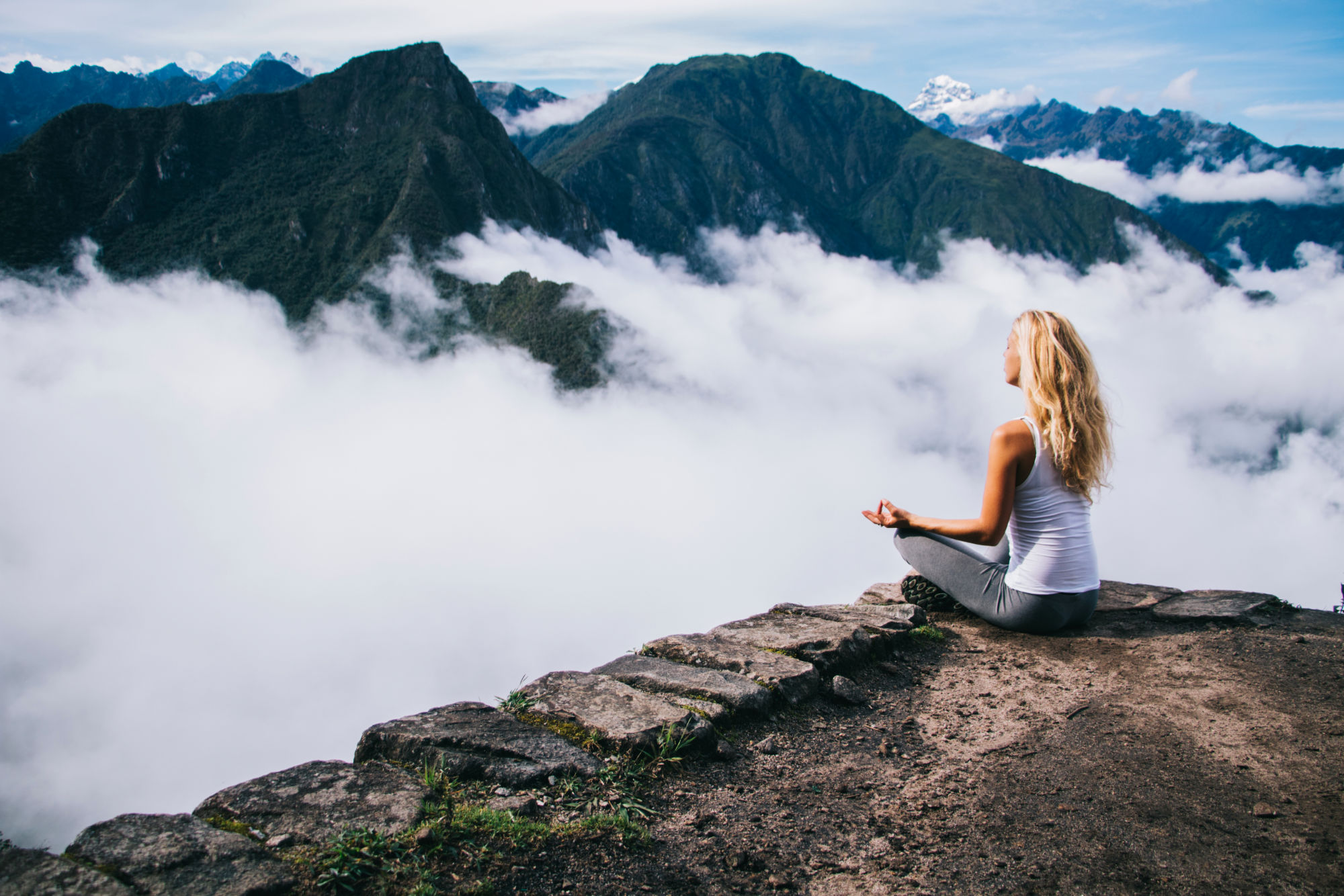
Tourist meditating at the summit of Huayna Picchu
Are there age restrictions for Huayna Picchu?
- The Huayna Picchu route, like many other hiking routes in Machu Picchu, is only open to visitors over 12 years old (accompanied by a responsible adult or guardian).
- The mountain trails are safe, but they run alongside cliffs, so the restriction helps prevent possible accidents.
Where can I leave my luggage?
- The rules of the Historic Sanctuary of Machu Picchu allow entry with backpacks weighing up to 5 kilos.
- However, if you have more, you can leave your belongings in rental lockers located very close to the entrance of Machu Picchu.
Recommendations
- If you have decided to climb Huayna Picchu, remember to purchase your tickets two to three months in advance.
- Walk calmly along the mountain trails—no one will rush you.
- If you go in the first group, you will be able to photograph Machu Picchu under milder weather conditions and with fewer visitors.
- Keep in mind that during the rainy season the ground can be slippery, so you should climb more carefully.
- Do not forget to bring sunscreen and insect repellent, as well as non-slip shoes, head protection, and a rain poncho.
- Finally, if you are not in good physical condition or suffer from vertigo, it is recommended to choose entry to Machu Picchu via the Panoramic Circuit or the Classic Circuit and take a lighter hike such as the Inca Bridge.
Frequently asked questions
1) Where is Huayna Picchu Mountain located?
Huayna Picchu is located north of Machu Picchu. After passing through the lower sector of the Inca citadel (circuit 3), you reach the Sacred Rock area, where the control point to access the mountain route is located.
2) What is the altitude of Huayna Picchu Mountain?
Huayna Picchu Mountain has an altitude of 2,693 meters above sea level, which is 263 meters higher than the Machu Picchu citadel.
3) How difficult is it to climb Huayna Picchu?
The ascent to Huayna Picchu is of moderate difficulty, although it includes steep paths, narrow stairways, and sections where you need to hold onto ropes.
4) How long does the hike to the summit take?
The average ascent time is about one and a half hours, while the descent takes less time (around one hour), depending on your physical condition.
5) How many people can enter Huayna Picchu per day?
A total of 400 people are allowed to enter Huayna Picchu each day, divided into two groups of 200 in the morning.
6) What is the best time slot to climb?
The first group (07:00 in the morning) offers clearer views and fewer tourists at Machu Picchu, while the second group (10:00 in the morning) is ideal for those arriving from Cusco on the same day.
7) What can you see from the summit of Huayna Picchu?
From the top of Huayna Picchu, you can admire the Machu Picchu citadel, the Vilcanota River, surrounding mountains, and the jungle landscape.
8) Which ticket should I buy to climb Huayna Picchu?
You must purchase the Huayna Picchu mountain route ticket (3A). If you wish to visit the Temple of the Moon, you must choose the Temple of the Moon or Great Cavern route ticket (3C), available only during high season.
9) How far in advance should I book my Huayna Picchu ticket?
It is recommended to book at least three months in advance, especially during high season (June to October), as demand is very high.
10) Is there a minimum age to climb Huayna Picchu Mountain?
Yes, only visitors over 12 years old are allowed, due to the risk and physical demands of the hike.
Advice from people who have been there
 By: Alonso R.
“Epic!“
“A mountain suited for those seeking excitement, beautiful views, and unmatched adventure. The climb is intense yet magical. The descent is also demanding. Don’t forget to bring insect repellent, water, and a camera. Rest in the shade and stay motivated. Vertigo can be challenging, but it’s a great obstacle to overcome. Don’t forget to visit the Temple of the Moon.“
By Ticket Machu Picchu – Last updated, March 26, 2026